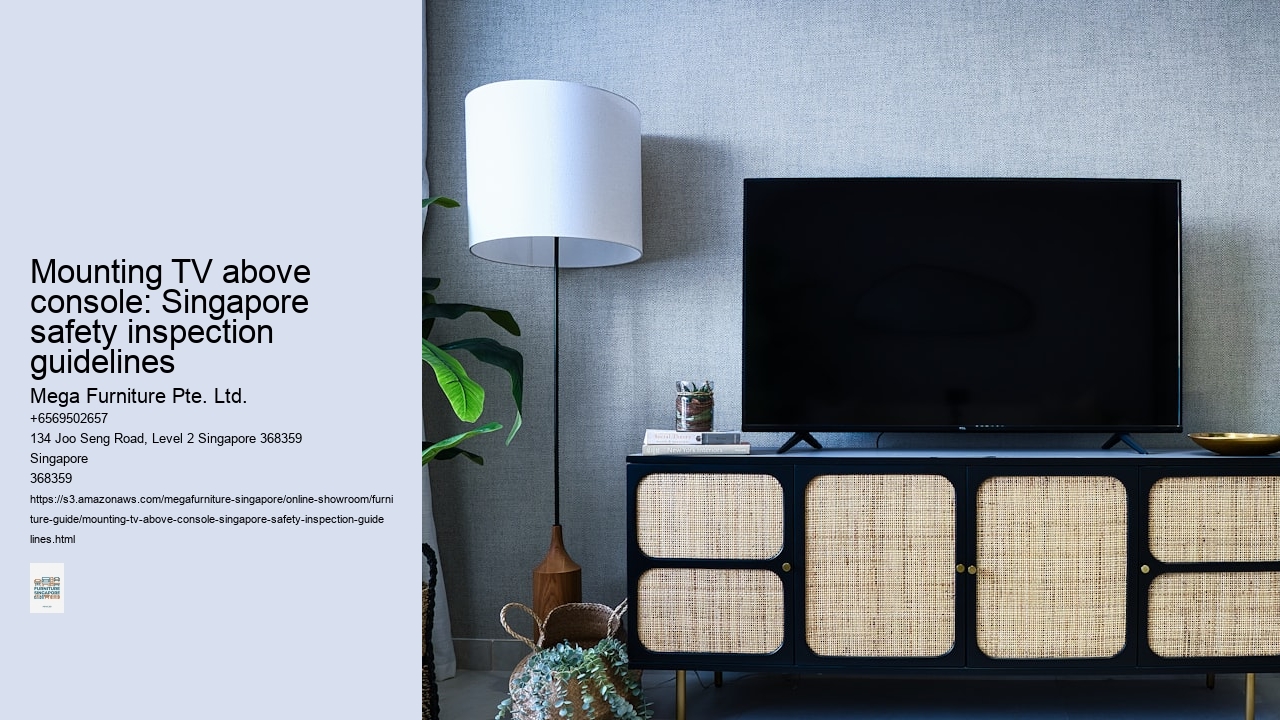
That laminate console you loved in the showroom can develop a wavy edge within a year if it’s not built for our humidity. Singapore’s environment, with its 80%+ relative humidity and occasional monsoon-driven dampness, dictates a shortlist of criteria that go beyond aesthetics and storage—material resilience sits at the top. Prioritise moisture-resistant constructions; solid woods like rubberwood or acacia should be treated, while quality laminates and engineered woods with sealed edges offer reliable defence against warping and mould. It’s a practical non-negotiable that defines how a piece ages in a Tampines flat or a seaside condo in Bedok.
Scale is the second silent factor. A 75-inch TV demands a console around 180cm or longer to look proportionate and prevent a top-heavy feel, but that length must fit your wall—often a challenge in a 4-room BTO living room where every centimetre counts. Depth is equally critical; buyer wants storage for an AV receiver, game consoles, and routers, but a unit that’s too deep can overwhelm a narrow space. Standard SG bed sizing, where storage beds often dictate room layout, offers a useful parallel: plan your console’s footprint with the same precision, ensuring enough clearance for walking and cabinet doors to swing open fully.
For families, surface durability extends beyond humidity. A playful cat or a toddler’s toy truck means scratch-resistant finishes like textured laminates, sintered stone tops, or properly sealed hardwoods become essential. Similarly, the clutter of modern entertainment is a cable management puzzle. Compact homes benefit hugely from integrated solutions: consoles with rear cable ports, built-in cord channels, or even a dedicated rear panel that tucks away power strips and excess wiring, transforming a tangled eyesore into a clean media wall.
Finally, consider the unit’s relationship to your floor. Wall-mounted or floating designs aid airflow and simplify cleaning—a small advantage that matters in our climate—while floor-standing variants offer sturdiness for heavier setups. The choice often comes down to whether you’re prioritising a light, airy visual to offset the humidity’s weight or seeking maximum stability. Either way, that decision, coupled with the right material, ensures your console functions as a lasting centrepiece rather than a seasonal casualty.
Full-extension runners aren't just a luxury; they're a necessity for HDB storage. You'll find remote controls and game cartridges shoved to the back of a deep drawer, and without full pull-out, they're lost forever. The cheap, partial-extension slides on many budget units feel gritty after a year — they jam, they sag, they frustrate. Invest in runners with a smooth, silent action and a positive click at the end of their travel; it’s a small detail that defines daily use. Look for steel ball-bearing mechanisms, and test them in the showroom with some weight in your hand.
Particle board has no place in a humid Singapore bathroom or kitchen, but buyers often forget it’s a risk in living rooms too. Condo units near the coast in Tanah Merah or Bedok, or ground-floor resale flats with poor airflow, create a damp microclimate that swells chipboard in months. You’ll see the laminate peel at the edges first, then the structure soften. For these zones, solid wood, quality plywood, or moisture-resistant MDF with proper sealing are the only sensible choices. It’s a upfront cost that prevents a warped, musty mess in two years’ time.
That sleek, wall-mounted console looks perfect for a 4-room BTO media wall — until you load it with a PlayStation, amplifier, and stack of records. The failure point is rarely the shelf itself; it’s the brackets and the wall anchors. Manufacturers’ stated load ratings assume perfect installation into solid concrete, not the plasterboard of some feature walls. Verify the rating, then mentally halve it for safety if you’re mounting into drywall. Overloading a floating unit is a silent mistake that ends in a midnight crash.
The most common visual error in Singapore living rooms is a 180cm console dwarfed by a 75-inch TV. It creates a top-heavy, teetering silhouette that unsettles the whole wall. The console should be at least as wide as the television, and ideally a few inches longer on each side for balance. For a 75-inch set (roughly 165cm wide), aim for a console around 200cm or more. That extra length also provides landing space for books or decor, grounding the display.
Floor-standing units feel stable until a toddler tries to climb a drawer or an earthquake drill shakes the room. Anti-tip brackets are cheap insurance, a simple metal strap that secures the cabinet’s back to a wall stud. Many flat-pack kits include them, but installers in a rush often leave them in the box. Don’t let that happen. In a family flat, it’s non-negotiable — securing a tall, narrow console takes twenty minutes and prevents a literal ton of trouble. Megafurniture’s collection details which models include these fittings as standard.
A spec sheet for a 240cm console might list "oak veneer," but that tells you nothing about the amber warmth of a real oiled finish versus the flat, plasticine yellow of a cheap laminate. That distinction only becomes clear under the showroom's LED panels, which mimic the harsh, direct light of a typical HDB living room. You're not just checking a colour swatch; you're stress-testing how that finish holds up under the exact conditions you live with—where a poorly matched grain can look glaringly artificial next to your existing teak coffee table. Online dimensions are a theoretical exercise, but your living room wall is a physical constraint. A console that looks balanced in a product shot can feel overwhelmingly long in a narrow 4-room BTO layout, or comically short beneath a 75-inch TV. Visiting a showroom like the one in Tampines lets you pace out the actual footprint, judge the proportion against your own height, and see how much visual weight a floor-standing design adds versus a floating variant. It’s the difference between buying furniture and solving a spatial puzzle. This physical verification extends to function, especially for local media setups. A drawer might be listed as "smooth-gliding," but does its action remain silent and sure when loaded with a StarHub set-top box, a soundbar, and two game consoles? You need to test the joinery yourself—open and close every door, feel for any wobble in the shelving, and confirm the cable management holes are actually large enough for a thick HDMI 2.1 cord. Photos can't reveal a drawer that sticks when the humidity spikes, a common Singaporean grievance. The final step is a tactile audit. Run a hand over the edges to check for sharpness or imperfect seams; inspect the back panel, often omitted from marketing images, to see if it's properly finished or just a sheet of particleboard. It’s these unphotographed details that determine whether a piece feels like a considered part of your home or just assembled flat-pack. For a central item like a TV console, that trip to Joo Seng to assess in person isn't an extra step—it's the entire point of buying something you’ll look at every day. You can start that assessment by browsing the options at
Megafurniture's collection.
The delivery team will ring you from the void deck, but the real question is whether your 240cm console can fit in the lift. For older HDB blocks, you’ll need to confirm the lift’s interior dimensions — many can’t accommodate a piece longer than 210cm without serious angling. Staircase clearance is the backup plan, and it’s a tough one; a turn at a common corridor landing often demands at least 10cm of extra manoeuvring space on all sides. That sleek, floor-standing unit you ordered might spend an awkward hour in the lobby while everyone figures it out.
Professional assembly isn’t just about following the diagram. It’s about preventing the all-too-common gouge in your BTO feature wall when a heavy panel slips during a DIY attempt. A proper two-person team will use padded floor protection and have the right tools to secure a floating console to the studs, which is critical for safety given the weight of a 75-inch TV and all the gear below. You’re not just paying for labour; you’re paying for the absence of repair bills.
In our humidity, warranty specifics matter. A standard one-year coverage on the hardware is typical, but scrutinise the fine print for exclusions related to ‘environmental conditions’. Solid wood consoles, especially rubberwood or oak, can warp if not properly treated; a robust warranty should explicitly cover humidity-related issues like door misalignment or cracking, not just manufacturing defects. It’s a distinction that becomes painfully clear during the monsoon season.
Keep your schedule loose. A 2pm to 5pm delivery window might stretch past 6pm thanks to a jam on the PIE or a slow unload at a previous condo in Tampines. Good retailers build this buffer in, but buyers organising their whole day around a single time slot often end up frustrated. The smoothest deliveries happen when you’ve cleared the entire afternoon, not just a one-hour slot.
For the widest selection of sizes that actually fit local homes, from compact 120cm units for a cosy bedroom to full media walls, it’s worth browsing Megafurniture’s collection. Their teams are accustomed to the lift-access dance in neighbourhoods from Bedok to Jurong.
The most common query isn't about style—it’s from a buyer in a 4-room BTO, tape measure in hand, wondering if a 180cm console will dwarf their 55-inch TV. It won’t. Aim for a console at least as wide as the TV; for a 55-inch screen (roughly 122cm wide), a 150cm to 180cm unit provides visual balance and practical overhang for soundbars. That extra length is crucial in many HDB layouts, where the living room wall also anchors the dining area—you need the storage, and the piece needs to command the space without looking stranded.
Can a floating console hold a 65kg TV? That depends entirely on the wall, not just the bracket. HDB concrete walls can handle the load with proper mounting, but the console itself must be rated for it. Check the product specs for maximum distributed weight; a well-made floating design in solid wood or reinforced engineered board will support the TV, but the media equipment inside adds another 10-15kg easily. Don’t gamble—if your setup is heavy, a floor-standing console removes the doubt.
East sun exposure is brutal on materials. Laminated MDF or veneers can blister and fade within a few years of direct morning light. You’re better off with sintered stone tops, which are virtually impervious, or looking for consoles in solid, stable timbers like teak or oak with a UV-protective finish. Lighter colours and matte finishes also show sun damage less obviously than a dark, glossy lacquer.
Concealing HDMI cables in a concrete HDB wall isn’t a casual weekend job. Chasing the wall requires approval and professional help, so many homeowners opt for simpler solutions. A cable management raceway painted the same colour as the wall is the most practical fix; run it vertically from the TV down to the console for a clean look. Alternatively, choose a console with a solid back panel and cable ports, feeding wires directly from a wall-mounted TV into the cabinet’s spine—it’s not completely invisible, but it’s organised and out of sight, which in a 4-room flat often feels like the same thing.
The best-laid media wall plans often stumble at the showroom tape measure. You'll see a beautiful 180cm console, but your living room wall is only 220cm wide and you've forgotten about the air-con trunking that eats 15cm on one side. That's why your final checklist starts at home, not in the store.
Grab a metal tape measure and document three things. First, the exact width of the wall space where the console will live, noting any permanent obstructions like column boxes or power points. Second, the dimensions of your new TV—or the one you're eyeing—as its width should ideally sit within the console's length. Third, measure the stack height of your existing equipment: that AV receiver, soundbar, and gaming console piled up might need 40cm of vertical clearance, which rules out any low-slung floating unit.
Don't forget the infrastructure. Note the location of your power point and router; a floor-standing console with a solid back panel will need precise cut-outs for cables, while a floating style leaves everything exposed and requires clever cable management. A simple hand-drawn floor plan, noting these points, is invaluable. It prevents you from falling for a stunning 220cm behemoth that simply won't turn the corner into your narrow HDB hallway.
This is also the moment to verify what your flat's walls can handle. Many BTO and resale flat partition walls are hollow; a wall-mounted console loaded with a sound system and collectibles demands solid brick or reinforced concrete for safe mounting. If your walls are questionable, a floor-standing design becomes the pragmatic, and often smarter, choice—it offers the same storage without the structural gamble. Bring these measurements and your floor plan with you to physically assess options against your real-world limits.
The corridor from the main door to the living room in a new BTO flat is often just 110cm wide, which means your TV console can't be much deeper than 45cm without blocking the walkway. A Bookshelf earns its place in Singapore homes through dual function — book and decor storage in the open shelves, soft visual division when placed mid-room in open-plan condominium layouts. Megafurniture's combined display unit and bookshelf hub covers tall book racks, cubby-hole designs, ladder shelves, modular cube systems, and glass-door pieces in oak, walnut, and MDF veneer finishes. Display cabinets sit between bookshelf and storage cabinet in function — closed glass-front protection for the items you want visible but not collecting dust. Megafurniture's Storage Cabinet range covers glass-front, curio, wall-mounted, and freestanding configurations in solid wood, MDF, and metal-framed constructions. Average pricing for glass-front variants sits around $271, with LED-lit and motorised-shelf models commanding the higher tier.. Solid-wood pieces typically start around $425, with most heights spanning 120cm to 220cm to fit standard 2.6m HDB ceilings.. It's a common spatial handcuff that forces a specific kind of furniture planning-long, low, and lean. A TV console anchors the wall opposite the sofa in the same way a tall bookshelf anchors a corner — long horizontal piece, mix of open and closed storage, defines the visual weight of one whole side of the room. Megafurniture's TV Console range covers floating wall-mounted designs, low-profile freestanding consoles, and modular feature-wall configurations. Most pieces sit at 40-50cm height, sized for screens up to 75 inches.. You'll find many console designs in this shallow depth range, but the real trick is matching the length to your wall and your screen; a 75-inch TV demands a console at least 180cm long to look anchored, not precarious. Resale flats and condos present a different puzzle entirely, with layouts that can swing from open-plan to oddly segmented. Here, the constraints shift from corridor depth to air-con trunking, structural beams, or full-height windows that eat up your prime media wall. A console meant to sit under a wall-mounted TV might have to stop short of a window ledge, or you'll need to plan cable routing around a bulky trunking cover. It's less about standard dimensions and more about customising your approach to the room's existing architecture. With a typical living area around 12 sqm, every piece needs to earn its footprint. A massive 240cm solid wood console might be a stunning feature, but it can overwhelm the space, making the room feel more like a showroom corridor than a place to unwind. Proportional scaling is key-a console should ground the TV without dominating the floor area, leaving clear walking paths to the balcony or dining space. In many homes, that means opting for a floating design or one with raised legs to maintain a sense of visual lightness and floor continuity. Material choices get practical fast in these settings. A glossy laminate might bounce too much light around in a sun-drenched condo living room, while a porous oak veneer could struggle with humidity near an open window. For families, a sintered stone top is a sensible favourite; it resists scratches from toys and won't stain from drink spills during weekend movie sessions. The goal is a piece that fits the room's physical limits first, then its lifestyle. Ultimately, the most successful console installs are the ones you stop noticing-they just work. They hide the cable chaos, offer a spot for the router, and provide enough closed storage to keep remotes and board games out of sight. It's a piece that has to juggle more roles than just being a TV stand, especially when square footage is at a premium. You can explore a range of solutions designed for these local constraints in Megafurniture's
TV console collection, where lengths and depths are clearly specified for easy planning.
The corridor from the main door to the living room in a new BTO flat is often just 110cm wide, which means your TV console can’t be much deeper than 45cm without blocking the walkway. It’s a common spatial handcuff that forces a specific kind of furniture planning—long, low, and lean. You’ll find many console designs in this shallow depth range, but the real trick is matching the length to your wall and your screen; a 75-inch TV demands a console at least 180cm long to look anchored, not precarious. Resale flats and condos present a different puzzle entirely, with layouts that can swing from open-plan to oddly segmented. Here, the constraints shift from corridor depth to air-con trunking, structural beams, or full-height windows that eat up your prime media wall. A console meant to sit under a wall-mounted TV might have to stop short of a window ledge, or you’ll need to plan cable routing around a bulky trunking cover. It’s less about standard dimensions and more about customising your approach to the room’s existing architecture. With a typical living area around 12 sqm, every piece needs to earn its footprint. A massive 240cm solid wood console might be a stunning feature, but it can overwhelm the space, making the room feel more like a showroom corridor than a place to unwind. Proportional scaling is key—a console should ground the TV without dominating the floor area, leaving clear walking paths to the balcony or dining space. In many homes, that means opting for a floating design or one with raised legs to maintain a sense of visual lightness and floor continuity. Material choices get practical fast in these settings. A glossy laminate might bounce too much light around in a sun-drenched condo living room, while a porous oak veneer could struggle with humidity near an open window. For families, a sintered stone top is a sensible favourite; it resists scratches from toys and won’t stain from drink spills during weekend movie sessions. The goal is a piece that fits the room’s physical limits first, then its lifestyle. Ultimately, the most successful console installs are the ones you stop noticing—they just work. They hide the cable chaos, offer a spot for the router, and provide enough closed storage to keep remotes and board games out of sight. It’s a piece that has to juggle more roles than just being a TV stand, especially when square footage is at a premium. You can explore a range of solutions designed for these local constraints in Megafurniture’s
TV console collection, where lengths and depths are clearly specified for easy planning.